
Travel, Logistics & Freight
Businesses that move goods and people, and hold no stock at all.
Most of an ERP is built around a shelf. Documents exist to answer how many are left, cost is relieved when goods move, and a sale is something leaving a warehouse. A tour operator, a freight forwarder and an exchange office ask none of those questions. What they sell is an arrangement, a route or a delivery — bought for one group, one container, one sealed bag, and worth nothing the day after. Forced through a stock-based cycle it produces items that never have a balance and receipts for goods nobody received. These three modules exist because the work needed documents of its own, each carrying cost and revenue without inventory being involved at all.
What Travel, Logistics & Freight covers
3 modules, licensed together or separately.
- Travel — Book the Trip, Then Price It Tour programs, group files and vouchers, with purchase and sales documents of their own.
- Freight Forwarding — A Module With No Warehouse Operation orders, bills of lading and service margin — for a business with no warehouse.
- International Postal System — Sealed Bag to Doorstep Receptacles, mail items, sorting and last-mile delivery for an international exchange office.
Cost and revenue with no inventory in sight
The box is not stock
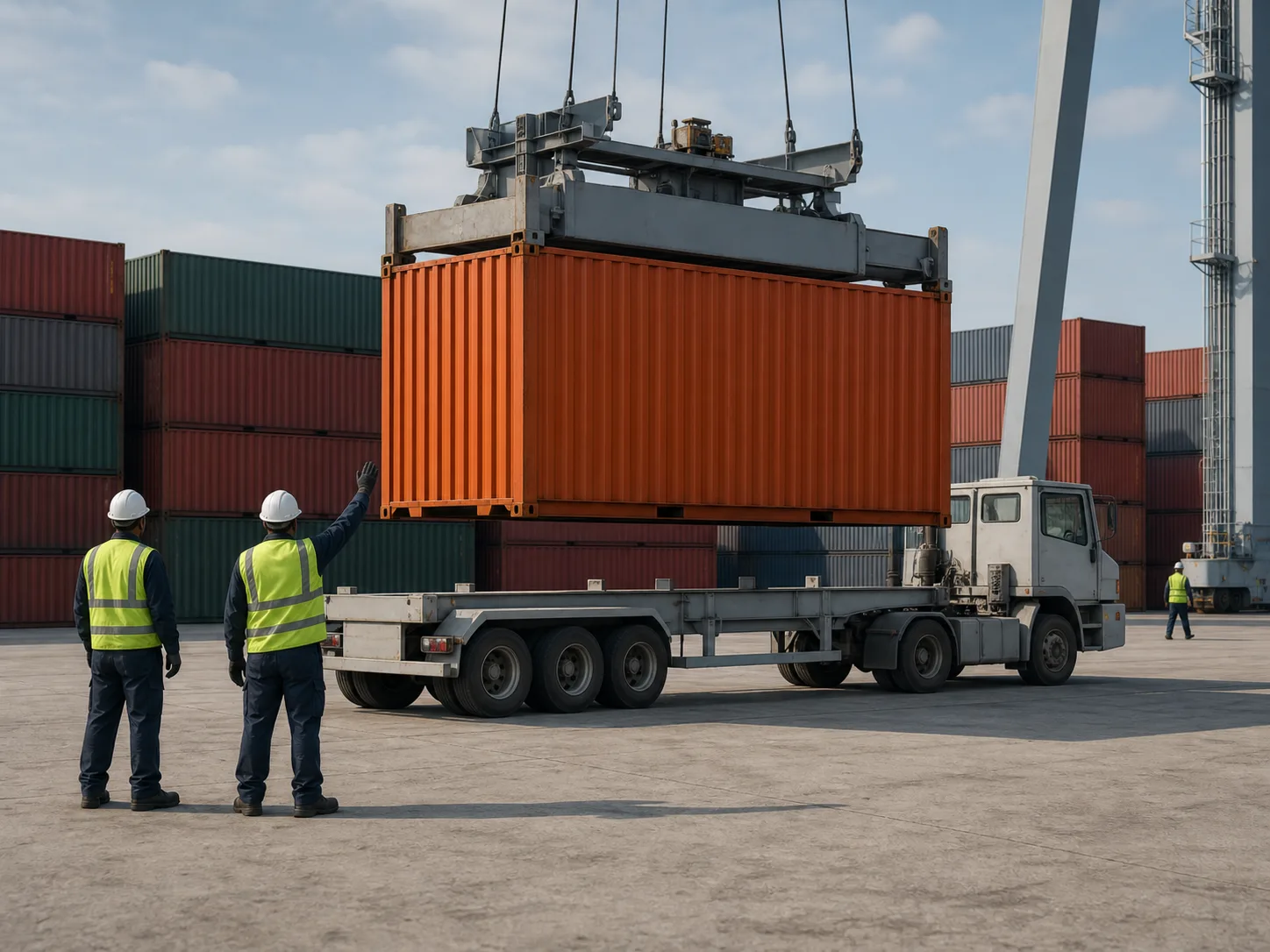
One operation order describes the shipment and touches no account. Cost then accumulates against the shipping line, the port and the haulier by name, revenue stands against the agent, and the margin on the box is a figure you read.
How it works together
Three modules, one shape. Each begins with a document that describes the work and carries no money at all, and only then raises the documents that do.
- Describe the work before pricing it. An itinerary is written once with day numbers and reused all season; a shipment is one operation order naming the parties, the vessel, the ports and the box; a bag of inbound mail is recorded with its seal, its dispatch reference and its declared weight beside the weight actually measured. None of the three has touched an account yet.
- Name the counterparty properly. A hotel, a restaurant and a guide are master files with their own accounts rather than shadow supplier records; a shipment distinguishes shipper, consignee, agent and notify party; a mail item names the person waiting at the far end of it. That is what makes “what do we owe this hotel” and “what did this agent bill” answerable without a spreadsheet in the middle.
- Turn the plan into money in one move. A button on the tour walks its bookings and raises one purchase order per party for you to price. An operation order carries cost and selling price on the same service line and fills both from matched price lists. A delivery request fixes the operational facts, and the delivery invoice books the value behind it.
- Price by the unit the business actually sells. A tour service — an arrival transfer for fifteen, a single-room supplement per night — is the smallest priceable thing in travel and the place its tax treatment is decided. In freight it is the service type, with a markup that can be a percentage, a fixed amount or both. In the postal half it is a delivery service keyed to a delivery area, so a distant address prices itself.
- Let the cost and the revenue meet on the same object. Everything in these modules is arranged so that the margin on one trip, one container or one round of deliveries is a figure to read rather than an evening’s reconciliation.
What none of it holds is a balance, and that is the point rather than a gap. The postal half does keep an inventory of a kind — items manifested, transferred, adjusted, stocktaken and held in retention — but it is a register of things passing through a building, not stock offered for sale. Where the conversation really is about goods on a shelf, it belongs with inventory management instead. The two starting points in the documentation are the freight module and the travel module.
Built for how the region actually works
The three businesses here are shaped by the same fact: the region is a place things pass through. An inbound operator receives a group from a partner agency abroad, buys everything on the ground in local currency and invoices the partner in another — so multi-currency and an agent relationship are the ordinary case, not a configuration exercise. A forwarder’s invoice is mostly not its own revenue: part of it belongs to the shipping line and the rest is what the company actually earned, and reporting the gross to a tax authority overstates the business, which is why the agent split is built into how the invoice is transmitted rather than corrected afterwards. And inbound mail clears customs before it moves, so classes, HS codes and declared values are captured on a custody manifest rather than reconstructed later.
Under all three sits the same platform the finance team already uses: one customer record, one supplier balance, e-invoicing where the country requires it, and Arabic-first documents — a voucher for a hotel, a bill of lading and a delivery note all print correctly right-to-left without a separate template.
Every screen, field and setting is documented in full.
Read the documentation →Good question — already answered
Why not just use the standard sales and purchase documents?
Because there is nothing to receive. Travel ships six financial documents of its own — purchase order, invoice and return on the cost side, the same three on the revenue side — precisely so that buying two hundred room-nights raises a cost and a liability and stops there. Freight works the same way from the other end: its items are service items classified as ocean freight, clearance, trucking and the rest, and none of them ever has a balance.
Is the international postal system a separate purchase?
No. It shares the freight licence code and the same menu as the forwarding side, so a company that licenses freight management has both. The two halves share their master files without sharing documents — an operation order and a receptacle receipt have almost nothing in common — so in practice you run whichever half your business is, and the other simply sits unused in the menu.
Can we see the margin on one group or one shipment?
Yes, and by two different mechanisms. On a shipment each sale line is matched back to its purchase line inside the same operation order — same service, currency, ports and container — so profit is visible per service rather than only per shipment, and a purchase line is marked used so it cannot be counted twice. On a trip, cost accumulates against the hotel, the restaurant and the guide by name while revenue stands against the agent, and both sets of documents point back at the same tour.
Part of what we invoice is not our revenue. Does the tax authority see the gross?
Not if the service is set up to say so. A freight invoice keeps two sets of lines: the operational ones staff work with, and consolidated electronic lines regenerated on every posting, which are what is submitted. Where a service names a commission item the value splits — the pass-through part under the original service, the commission under the commission item — and a setting on the invoice's term decides whether the pass-through line is transmitted at all.
Does any of this plan the work — routes, sailings, driver runs?
No, and it is better to know that before an evaluation than after. Sailing schedules are a reference table a sales desk reads when picking a suitable sailing, not an optimiser, and nothing in the family solves a routing problem or allocates capacity for you. What these modules do is record the arrangement accurately, price it, and make the money follow it.
Industries that lean on this
Companies already running Nama ERP








Namasoft requires no posting run at all, and that is a very strong point. With the previous system that used to cost me a great deal of time and effort just to reach the information I needed — balances and so on — before I could produce a sound balance-sheet report. With Namasoft it costs us no time whatsoever.
Get started with Nama today
Tell us how your business runs and we will show you how Nama ERP fits it — in your language, on your infrastructure.